Monday, 13 October 2014

Canadian Autumn - SGC & IAC


Hello there! The last time I wrote a blog post I was in the middle of the US on what was the road trip of a life time - but more on that later :) Now that I'm back in London, I'm still recovering from an incredible 5 months in Canada. Having worked at the SSP14 and travelled around the continent, I spent my last 2 weeks in the land of maple syrup attending two very special space events. Get ready for a very  long (but picture-friendly) blog post!


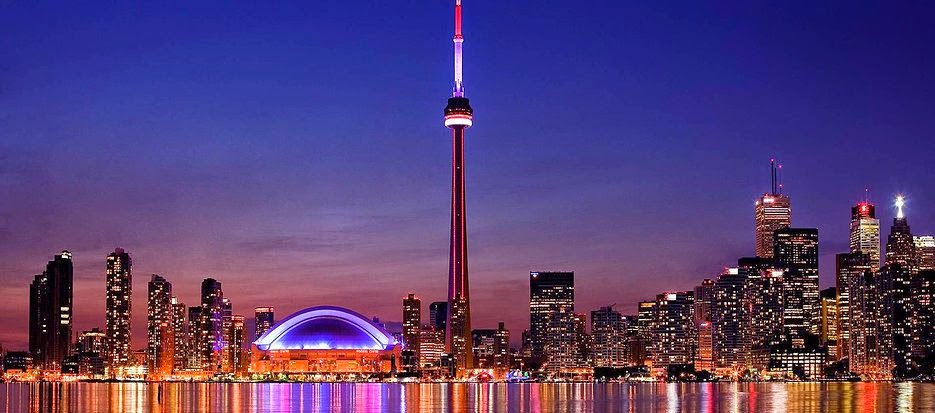
This autumn, Toronto was home to two international space conferences — the 13th annual Space Generation Congress (SGC) and the 65th annual International Astronautical Congress (IAC). Having always wanted to attend, this year I finally managed to go and experience them for myself and share it with you in this post.


The SGC is an relatively young conference organised by the Space Generation Advisory Council (SGAC). This is a non-profit organisation which aims to give students and young professionals in the space industry a voice through which we can speak directly to the United Nations (UN), space agencies, industries and academia. 


I took part in the 'Ethics & Policy of New Human Space Exploration Strategies' Working Group. There were also the Working Groups of 'Entrepreneurship & it's Role in the Space Industry', 'On-Orbit Servicing', 'Cubesat Swarms' and 'Earth Observation for Maritime Services'.


As an SGAC member, I am able to attend the SGC and discuss key space issues alongside other young professionals and students in the space industry. It's a great way to network, collect ideas and trigger innovation. Projects produced here are then presented to the UN!


For the Closing Gala Dinner, NASA Administrator and former astronaut Charlie Bolden spoke to the next generation of space leaders in the unique setting of the Ontario Science Centre. As my first time at the conference, I met some wonderful people from across the world! Including NASA Associate Administrator for Education, Donald James. 


And it doesn't stop there.. 


The following week was the IAC, an international conference with over 3000 people. This year's theme was 'Our World Needs Space' - founded in 1951 by the International Astronautical Federation (IAF), I was lucky enough to attend as Accredited Press with  Space Safety Magazine*. 


 The IAC is known for its grand Opening Ceremony on the first day and this year was no exception. The Canadian-themed event was hosted by two Canadian Space Agency (CSA) astronauts David St-Jacques and Jeremy Hansen.


Canadian astronaut Cmdr Chris Hadfield provided a thought-provoking speech on human spaceflight and the nature of this innate human curiosity to explore the unknown. There were also performances from each province in the land, ice skaters, Cirque du Soleil as well as incredible singer-songwriter Peter Katz. He sang an inspiring song named 'Oliver's Tune' which beautifully reflected the message of the IAC. 


The main conference is comprised of technical talks given by some of the attendees on papers that have been submitted. This was a wonderful way to listen to our peers and hear where their passions lie. There were also plenary sessions such as the Space Industry Leaders Session which invited open questions from the audience to the heads of ESA, (CSA), JAXA and NASA. 


The final part of the IAC was an exhibition hall overflowing with space companies and organisations all willing to meet like-minded people and share information on the latest innovations in the industry. I even got to sit in the (extremely comfy) Tesla-designed seats for the Dragon 2 spacecraft by SpaceX and pretend to be an astronaut in the Russian Orlan spacesuit! 


All in all — both the SGC and IAC conferences were wonderful experiences meeting new friends and reconnecting with old friends from across the globe. They're great ways to network and exchange ideas with other people that also want to somehow influence the future of space in some way or the other. 


Whether it be putting robots on Mars, satellites in orbit or humans on the International Space Station (ISS) and beyond — the SGC and IAC are the places to be. Sharing the same location annually, both conferences will convene in Jerusalem, Israel next year. 


See you there!


-Nikita


*I wrote an article about IAC 2014 for Space Safety Magazine here.


(CN Tower photo credits: Remco Timmermans)
(Donald James photo credits: Lauren Lyons)
(Two Group photo credits: SGAC & Tanay Sharma)


Tuesday, 30 September 2014

International Astronautical Congress 2014


Toronto will become the center of the universe this week as the city hosts the 65th International Astronautical Congress (IAC) 2014. Taking place from September 29th to  October 3rd, the annual international convention will bring space to Canada. This year’s theme, Our World Needs Space, covers a plethora of topics — many of which are related to space safety. Ranging from human spaceflight to space debris, the conference is an opportunity for space professionals and students from across the globe to network, share their ideas, and learn with the global space community.
The one week long conference will include a variety of symposia, each containing a series of sessions. These talks will be given by researchers and experts in their fields. Several of the symposia follow the theme of space safety — including the Space Exploration, Human Exploration of the Solar System, Space Debris and Human Spaceflight symposia.  Looking into where humankind has gone and may go in the future, as well as the societal implications of discovering extraterrestrial intelligence are important topics of discussion at the IAC.

Breaking It Down

The Space Exploration Symposium (A3) covers the current and future robotic missions and material plans for initiatives in the exploration of the Solar System. Coordinated by Dr. Christian Sallaberger from Canadensys Aerospace Corporation and Prof. Bernard Foing from ESA/ESTEC, this symposium covers exploration of the solar system, including the Moon, Mars, and small bodies. Speakers from NASA and the German Aerospace Centre DLR will present their research as part of this symposium.
The Human Exploration of the Solar System (A5) will tackle the strategic plans, architectural concepts, and technology development for human exploration of the Moon, Mars, Lagrangian Points, and near Earth objects (NEOs).  These are important areas of discussion, especially within the area of space safety since the methods by which humans explore the solar system should maintain an appropriate standard of safety.
The Space Debris (A6)  symposium addresses the wide range of technical issues associated with space debris. Measurements, modeling, and risk assessment in space and on the ground are addressed by speakers from organizations such as Boeing and SwissSpace Systems and universities such as the University of Surrey and Concordia University.  Reentry; hypervelocity impacts; and protection, mitigation, and standards and space surveillance will also be presented and discussed as a part of the Space Debris Symposium.
The Human Spaceflight Symposium (B3) symposium addresses all practical aspects of human spaceflight. Mr. Christian Bank from EADS Astrium Space Transportation GmbH and Mr. John Uri from NASA are coordinating the symposium, which will include talks on governmental and commercial human spaceflight programs as well as advanced systems, technologies, and innovations for human spaceflight.

Top Picks

This wide variety of space safety-related topics being discussed at the IAC demonstrates the importance of such a conference in terms of connecting and inspiring like-minded people.  The session that I am most looking forward to is the Heads of Agencies plenary event where leaders of the world’s major space agencies will outline the latest developments in their countries. The session may also provide an interesting variety of perspectives on the future of human spaceflight, including the International Space Station. Another highlight of the week for me is theNext Generation Plenary – Innovations in Exploration on Tuesday at 13:30. Moderated by former Canadian Space Agency astronaut Chris Hadfield, the panel is comprised of a selection of young professionals who will discuss why they believe their ideas will change the way we explore space and how space impacts life on Earth. This interaction between a world-renowned astronaut and the next generation of space leaders is a powerful method of generating novel ideas through discussion.

Space Safety Magazine at IAC

Along with 3,000 participants from over 70 countries attending the week-long conference, there will also be presentations from Space Safety Magazine contributors including Matteo Emanuelli, Andrew Henry, Morris Jones, and Merryl Azriel. Matteo will present The NEO Threat: An Effective Public Communication Strategy dealing with NEO education and the ways in which to effectively communicate such a threat to the public three years in advance. Andrew will conduct a workshop on Earth Observation Data on Thursday afternoon and Morris Jones will present a paper on Cryptosociology and Extraterrestrial Civilizations Wednesday afternoon.  Merryl Azriel will present the Space Safety Magazine-led initiative to recognize the International Space Station (ISS) Partnership with a Nobel Peace Prize award. With a presentation entitled Advocating for a Nobel Peace Prize: An Innovative Approach to Promoting Global Space Engagement, Merryl will delve into the unique value of the ISS partnership and the importance of increasing the public’s awareness of the value of the most complex peacetime collaboration ever undertaken by humankind.
Founded in 1951 by the International Astronautical Federation (IAF), the IAC is a joint effort by the IAF and a local Host. This year this it is the Canadian Aeronautics and Space Institute (CASI) that is coordinating the logistics in Toronto and ensuring that the North American aspect of IAC 2014 is a prominent characteristic of this year’s conference.

Written by Nikita Marwaha for Space Safety Magazine

Sunday, 7 September 2014

Road Trippin'

It's been a little over a month since my last blog post and I have a very good reason for this. The screenshot below is the route I have been travelling by car since last month. 


Impressive isn't it!? I've been making a loop from my home for the summer Montreal, across to the West Coast of Canada and down to the US where I am now. I'm writing this from Buffalo -  a town in Wyoming (McDonalds WiFi is a tourist's best friend).


I'll be back in Ontario soon and will write a post about my North-American adventures - there's been a lot to see along the way!


-Nikita 


Friday, 1 August 2014

Human Performance in Space

For three weeks here in Montreal it was Department time at SSP14. Participants chose from either Space Sciences, Policy, Economics & Law, Space Engineering, Space Applications and my Department Human Performance in Space. During these few weeks they attended the Departmental Activities that have been planned for the past few months. 


My Department Activities included a variety of professional visits, visiting lecturers and workshops that enriched the lecture material given at the start of the program. As the Teaching Associate for Human Performance in Space, I had the chance to work alongside some fantastic visiting lecturers and participants!

 The first Departmental Activity was a Neuroscience Workshop. Participants used neuroscience equipment flown onboard the Shuttle that was utilised for measuring disturbances in spatial orientation (posture, eye moments, cognition) - typical in astronauts after returning to Earth. It was pretty fun to watch everyone try to write their names whilst wearing inverted mirrored goggles :)

HPS also visited the PERFORM Centre - a research-driven facility with state-of-the-art equipment and ultra-modern laboratories and suites. We were able to see experiments take place in the Functional Assessment Lab and Cardiopulmonary Suite.

Last year's TA for HPS, Ana Diaz visited the Department and gave an interesting workshop on Spacesuit Design.


She brought along some sample spacesuits from Massachusetts Institute of Technology (MIT) - including the famous Biosuit which I'm posing with below.

The nearby Cosmodome in Laval provided hours of fun. The space centre has three different virtual missions that include challenges such as testing piloting abilities and collaborating with crew members to construct the International Space Station (ISS). 

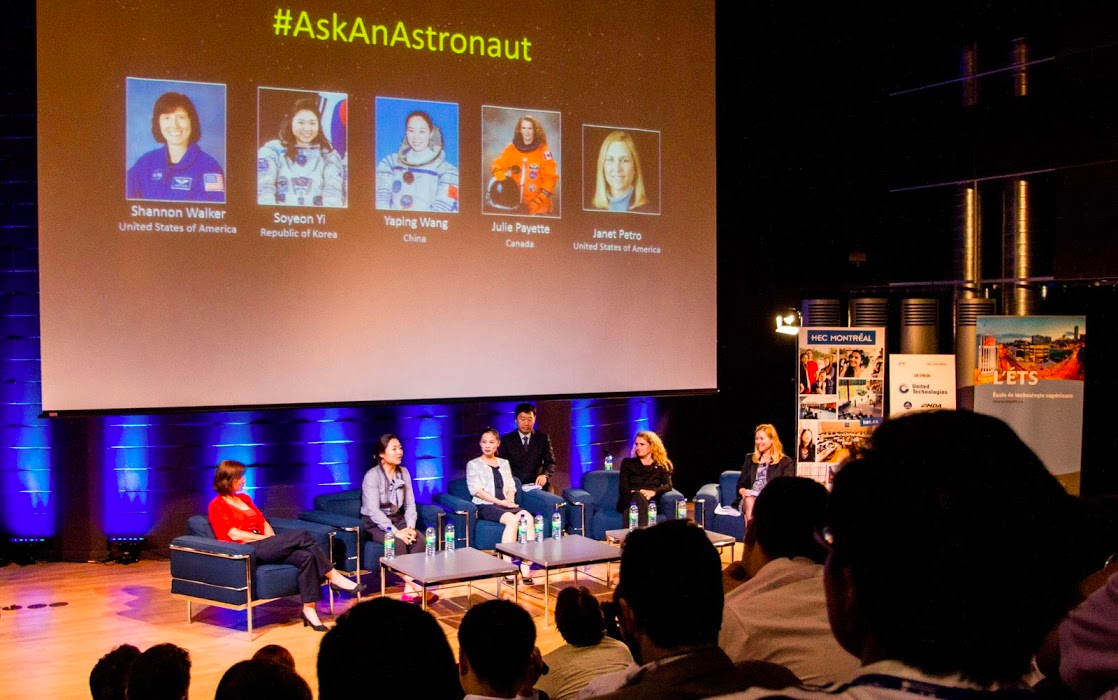
As the Human Performance in Space Department, we had some astronauts visit us including Canadian Space Agency (CSA) astronauts Bob Thirsk, David Saint-Jacques and the first Korean astronaut Soyeon-Yi. This in turn led to a astronaut selfie with my friend Hugo - an opportunity too good to miss at space school :)

Bob Thirsk and David Saint-Jacques ran a workshop on Space Scenarios that I devised with help from Bob. Participants spent time imagining themselves in different real-life space situations such as a hard-working yet isolating crew member or a trajectory occurring back on Earth and we discussed potential outcomes of these. It was interesting to put ourselves in the shoes of an astronaut orbiting above the Earth.

Soyeon-Yi took part in the annual Space Studies Program astronaut panel the night before. This was the first year that the panel was all-female! One small step for women and one giant step for gender equality :)

The last week of Departmental Activities included a visit to the Canadian Space Agency (CSA) and the Montreal Biodome.

We visited the headquarters of CSA and saw the Canadarm training facilities as well as observing mission deployment using a Juno rover prototype in the outdoor Mars yard. The rover was controlled via remote tele-operation from the ExDOC control centre.

The penultimate Departmental Activity took us to the Biodome - the 'house of life' in the heart of the city. Its 5 enclosed ecosystems are a great way to learn about life support systems in space. Animals and plants from across the world are housed here including the adorable sloths and penguins (my favourites)!
The last Departmental Activity was Project Presentation Day. Participants in my Department had been working on a Human Performance in Space project for the past 2 weeks. With topics ranging from embryonic development in space to the influence of plants on humans in space, the talks were very insightful and I loved hearing such interesting presentations from everyone. Below is a presentation on a project that I proposed - Creative Communication of HPS. I was very impressed with the inspiring results of the research done by Ariane and Akane - the wonderful participants that chose my topic :)
Afterwards, we treated everyone to a surprise party complete with balloons, cake and snacks! Always a great combination. As a thank you for my work as their TA, the participants got me a cute teddy and flowers :) I miss my HPS-ers already!
 
Following the end of Department time, Alumni Weekend was upon us here at SSP14. Every summer, International Space University alumni from across the globe attend this weekend wherever that year's summer program is taking place. Below is a photo of alumni from the year that I did SSP in Florida - SSP12  :)

The annual Space Masquerade Ball and Alumni Vs Participant football match also takes place during Alumni weekend. There's a costume competition and this year's prize went to a group that collectively dressed up as the International Space Station! Cultural night was also incredible this weekend since it was Canada's turn - they put on a great show!

Right now we're in the middle of Team Project work. It's pretty hectic with report writing, editing and deadlines but the end of SSP will be upon us next week as Week 9 arrives and we will start to fly back to our respective corners of the world. SSP has once again ended too soon -my next blog post will include some of the highlights of SSP14 so that I can relive the program through memories of the summer.

-Nikita

*Photo Credits: Hugo Wagner


Wednesday, 9 July 2014

Mont Tremblant

Another weekend here in Canada usually means another nearby city to explore. And this time, I ventured north of Montréal with some friends to Mont Treblant. 

A sleepy ski-resort in the Laurentian mountains of Quebec, the city is beautiful sans snow. With the blazing summer sun, picturesque lake and artificial beach, it was hard to imagine the place as a snow-capped ski resort in the winter months!


 We arrived on the weekend of the International Jazz Festival - which made for a relaxing backdrop as we spent our time on the beach, by the lake and generally taking some time out from our very busy schedules at the International Space University's Space Studies Program in Montréal. 


We stayed in this cute, family-owned B & B. The owner made us the best French toast I've had and I of course drowned it in Maple Syrup -I'm addicted to the stuff now and even take it in my coffee!
 The highlight of the weekend had to be riding a horse for the very first time. I know, how have I lived the past 24 years of my life and never been on a horse? I get that a lot! Last Sunday morning we toured the hills of Mont Treblant from on top of some very large horses. As a  relatively small person, this was pretty daunting - but I'm glad I finally did it - even if my horse Trixie didn't want to listen to me!
 
 Me and Trixie - we had some ups and downs.


After we were done pretending to be cowboys and cowgirls we spent the afternoon by the Mont Treblant lake before driving only 1 hour and a half home to Montréal. 

It's great to be back and in the middle of Department Activities (DA's). My department, Human Performance in Space (HPS) is going well so far. Once DA time is over next week I'll be sure to write a blog post about space life in the HPS Department and at SSP14 - but for now I'm off to get some well-needed rest (ISU - also is known as the Insufficient Sleep University)!

-Nikita


Related Posts Plugin for WordPress, Blogger...